Interactive Gigazoom • Scroll or Double-Click
100%
The Cleveland Museum of Art
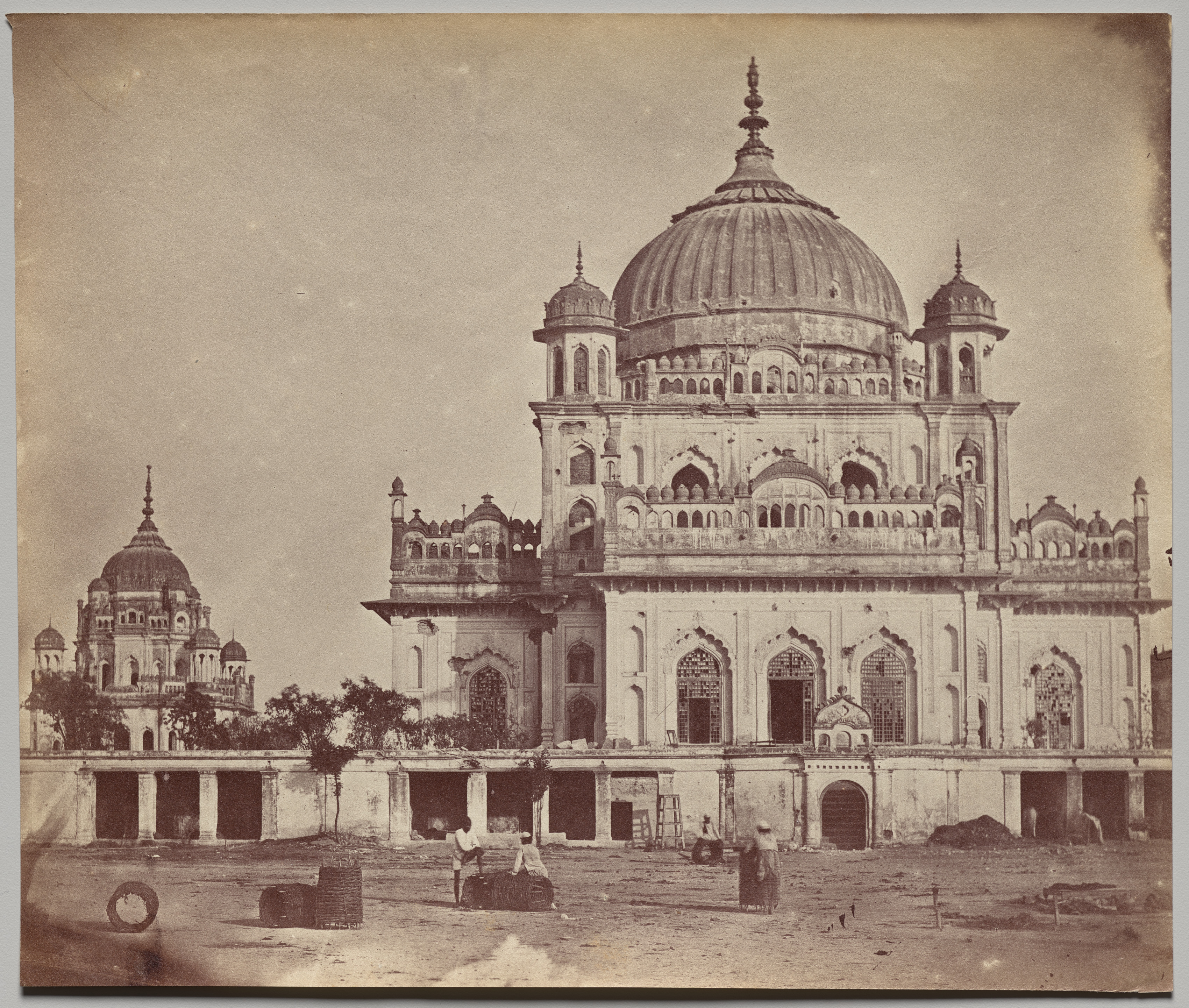
Small Mosque in the Kaiserbagh
Description
Built for Wajid Ali Shah (1847–1856), between 1848 to 1850, Kaiserbagh Palace is a fine example of 1800s architecture in Lucknow, northern India. Parts of Kaiserbagh Palace were destroyed during the Indian Rebellion (an uprising against British rule), also known as the First War of Independence in 1857. This photograph captures the small mosque of the palace after the British siege of the city. Mosques are Muslim places of worship, used for five daily prayers, teaching the Qur’an, and community gatherings. The small mosque in the Kaiserbagh complex, however, served primarily the ruler’s family and members of the court.
Provenance
Sir William Russell, 2nd Baronet; (Christie's, London, United Kingdom, October 20, 1993 sale); (Christie's, London, United Kingdom, September 27, 2001 sale); Private Collection, United Kingdom; (Prahlad Bubbar Indian and Islamic Art, London, United Kingdom, sold to the Cleveland Museum of Art); The Cleveland Museum of Art, Cleveland, OH
Dimensions
25.4 × 30.5 cm
Movement / Period
Accession No
2019.170.16
Official Citations
Curatorial Affinity Stream
Continuing the Universe of Felice A. Beato (British, 1832–1909)
Photography • England, 19th century • Harmonious Works & Contemporaries
Continuous Discovery