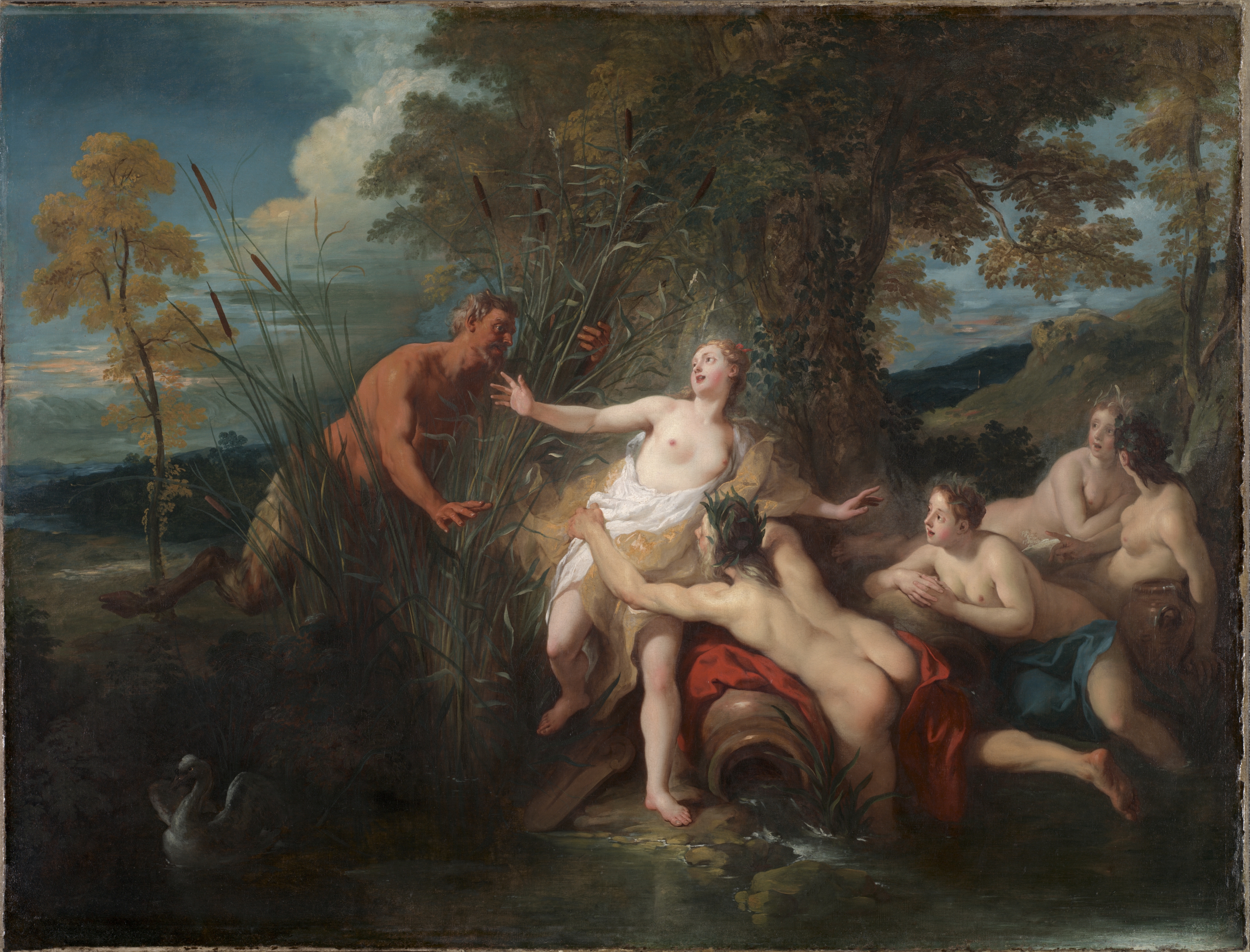
Pan and Syrinx
Description
Provenance
The Cleveland Museum of Art, Cleveland, Ohio; (Herner Wengraf/Old Masters Galleries, London, sold to the Cleveland Museum of Art); (Christie’s, London, sale, June 29, 1973, no. 93, sold to Herner Wengraf); George Ortiz [1927-2013], Geneva, consigned to Christie’s; Graziella Patiño de Ortiz-Linares [b. c. 1908-1980], to her son, George Ortiz; Page?1; (Galerie Charpentier, Paris, Chaix d’Est-Ange sale, Dec. 11, 1934, lot 46, sold to “Page”); Family of Gustave Chaix d’Est-Ange III, consigned to Galerie Charpentier; Gustave Chaix d’Est-Ange III [1863-1923], by descent to his family; Jeanne Sipière Chaix d’Est-Ange [1843-1917], to her son, Gustave Chaix d’Est-Ange III
Dimensions
106 × 139 cm
Movement / Period
Accession No
1973.212
Official Citations
Continuing the Universe of Jean François de Troy (French, 1679–1752)
European Painting and Sculpture • France, 18th century • Harmonious Works & Contemporaries