Description
Provenance
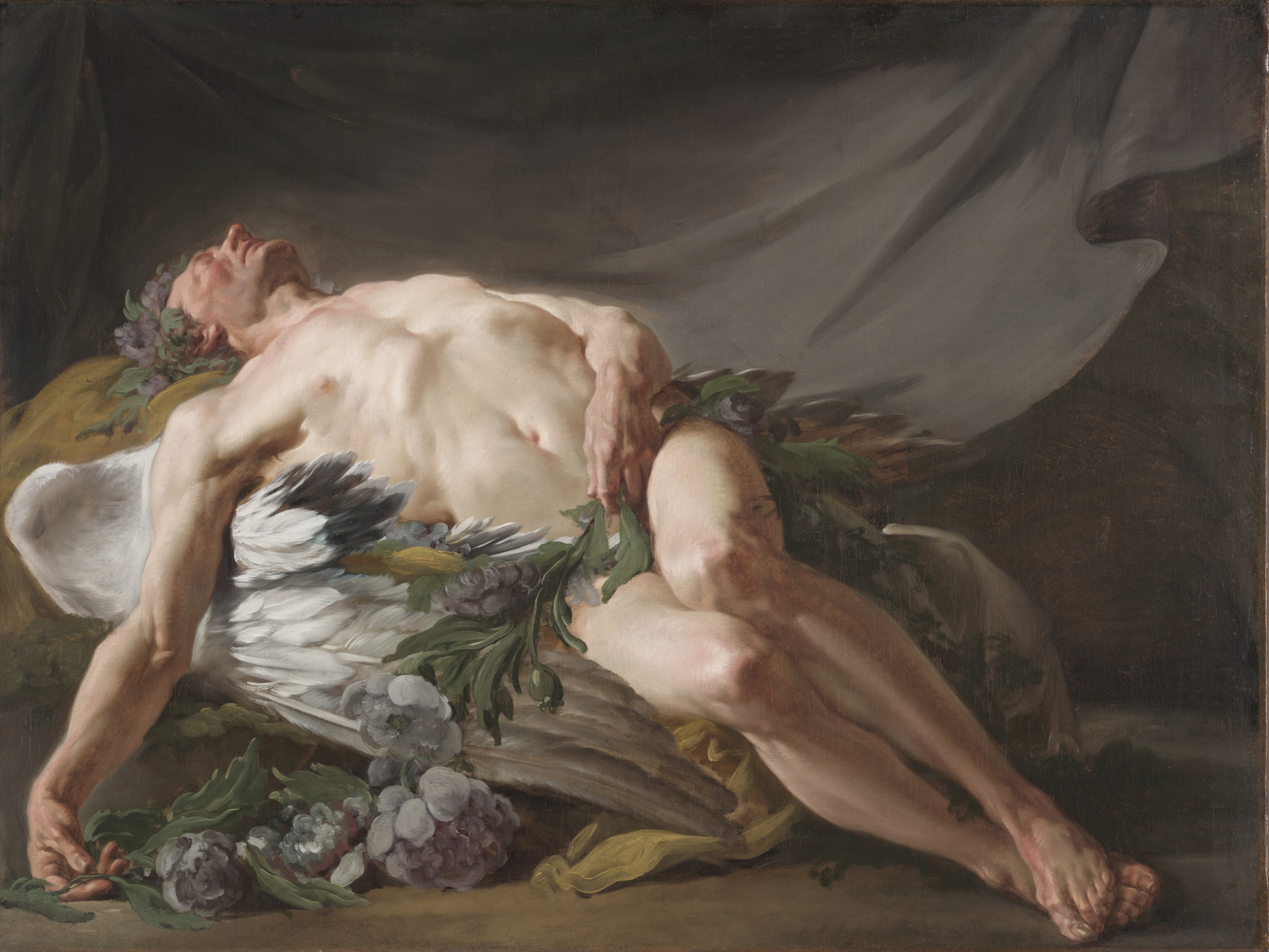
possibly exhibited at the Paris Salon of 1771, cat. 137 ("Sommeil, figure d'etude); possibly exhibited at the Salon de la Correspondance of 1783, cat. 144 (as "Morphée"); possibly listed as "Morphée" in the inventory made at the artist's death, 1797; (Sold, Boussod, Valadon et Cie., Paris [as attributed to Fragonard]); (sold, Hotel Drouot, Paris, December 2, 1910, no. 13, as attributed to Fragonard); Octave Linet (1870-1962), Paris and Tours, France; (Octave Linet, sold, Palais Galliera, Paris, March 23, 1963, no. 16, as "Le genie du sommeil," as by François Boucher); (Galerie Cailleux, Paris, France), sold to the Cleveland Museum of Art, 1963.; The Cleveland Museum of Art, Cleveland, OH
Dimensions
97.6 × 130 cm
Movement / Period
Accession No
1963.502
Official Citations
Continuing the Universe of Jean Bernard Restout (French, 1732–1797)
European Painting and Sculpture • France, 18th century • Harmonious Works & Contemporaries