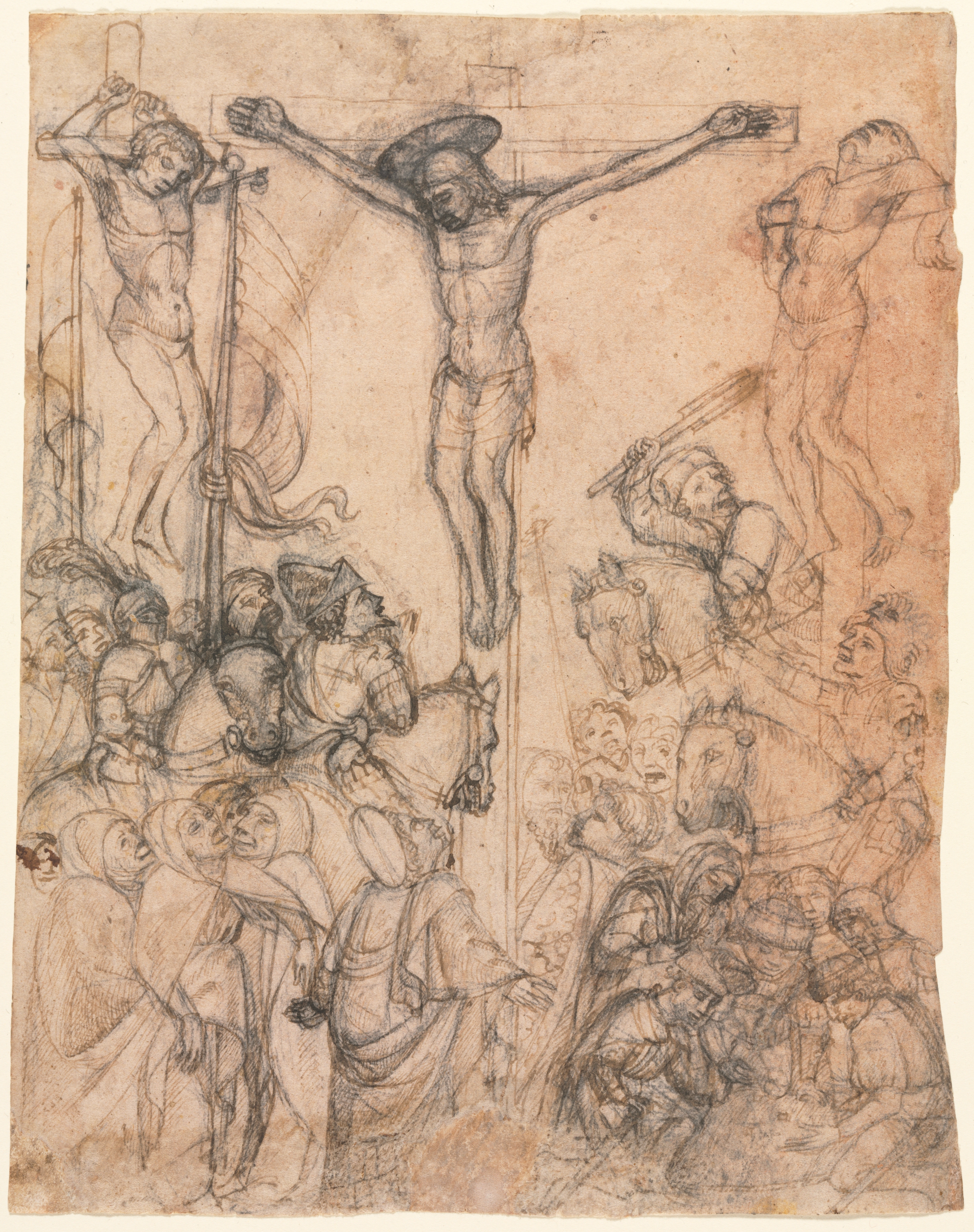
Crucifixion with the Two Thieves
Description
Provenance
The drawing is acquired by Antonio II Badile (c.1424-c.1511); The drawing is included in an album of drawings compiled from Antionio II Badile’s collection, likely by one or both of his sons, Bartolomeo III Badile(1464/67-1545) or Francesco II Badile(1476/77-1544).; The drawing is in the collection of Lodovico Moscardo as part of the Badile Album.; The drawing enters the collection of the Miniscalchi family as part of the Badile Album upon the marriage of Teresa Moscardo and Marcantonio Miniscalchi.; The drawing is purchased by an unknown collector after Mario Miniscalchi-Erizzo begins to sell drawings from the Moscardo collection, including the Badile Album.; The drawing is purchased, along with the rest of the Badile Album, by Francis Matthiesen, who dismantles the album and begins selling individual drawings.; The drawing is purchased by the Cleveland Museum of Art.
Dimensions
24.4 × 19.4 cm
Movement / Period
Accession No
1956.43
Official Citations
Continuing the Universe of Unknown Artist
Drawings • Italy, Piedmont • Harmonious Works & Contemporaries