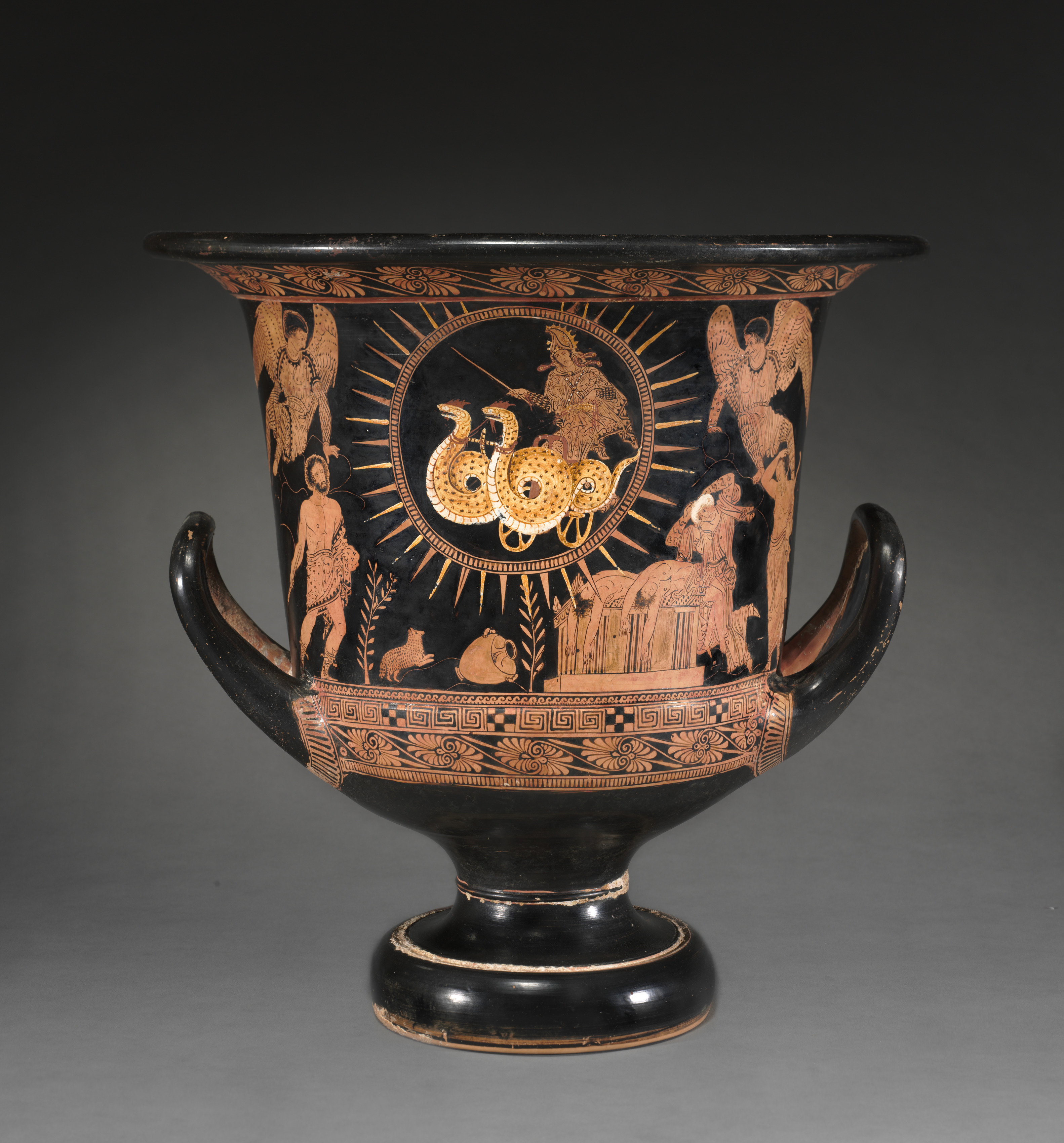
Red-Figure Calyx-Krater (Mixing Vessel): Medea in Chariot (A); Telephos with Baby Orestes (B)
Curatorial Overview
“The remarkable scene on the front of this vase relates to the famous tragedy Medea, written by Euripides and first produced in Athens in 431 BC. Framed in the center by a halo (recalling her sun god grandfather Helios), the sorceress Medea flies off in a dragon-drawn chariot. Seeking revenge against her husband Jason, leader of the Argonauts, Medea has just slain their two children. Two Furies flank her, while Jason and a distraught nurse and teacher approach the bodies on the altar below. A different tragedy unfolds on the other side of the vase, from Euripides’s Telephos (438 BC). The wounded warrior Telephos holds the baby Orestes hostage at an altar, with Agamemnon and Clytemnestra rushing to save their son.”
Continuing the Universe of Policoro Painter (South Italian, Lucanian, active c. 400 BCE)
Greek and Roman Art • South Italian, Lucanian • Harmonious Works & Contemporaries