Gigazoom • Double-Tap or Pinch to Zoom
100%
Curatorial Overview
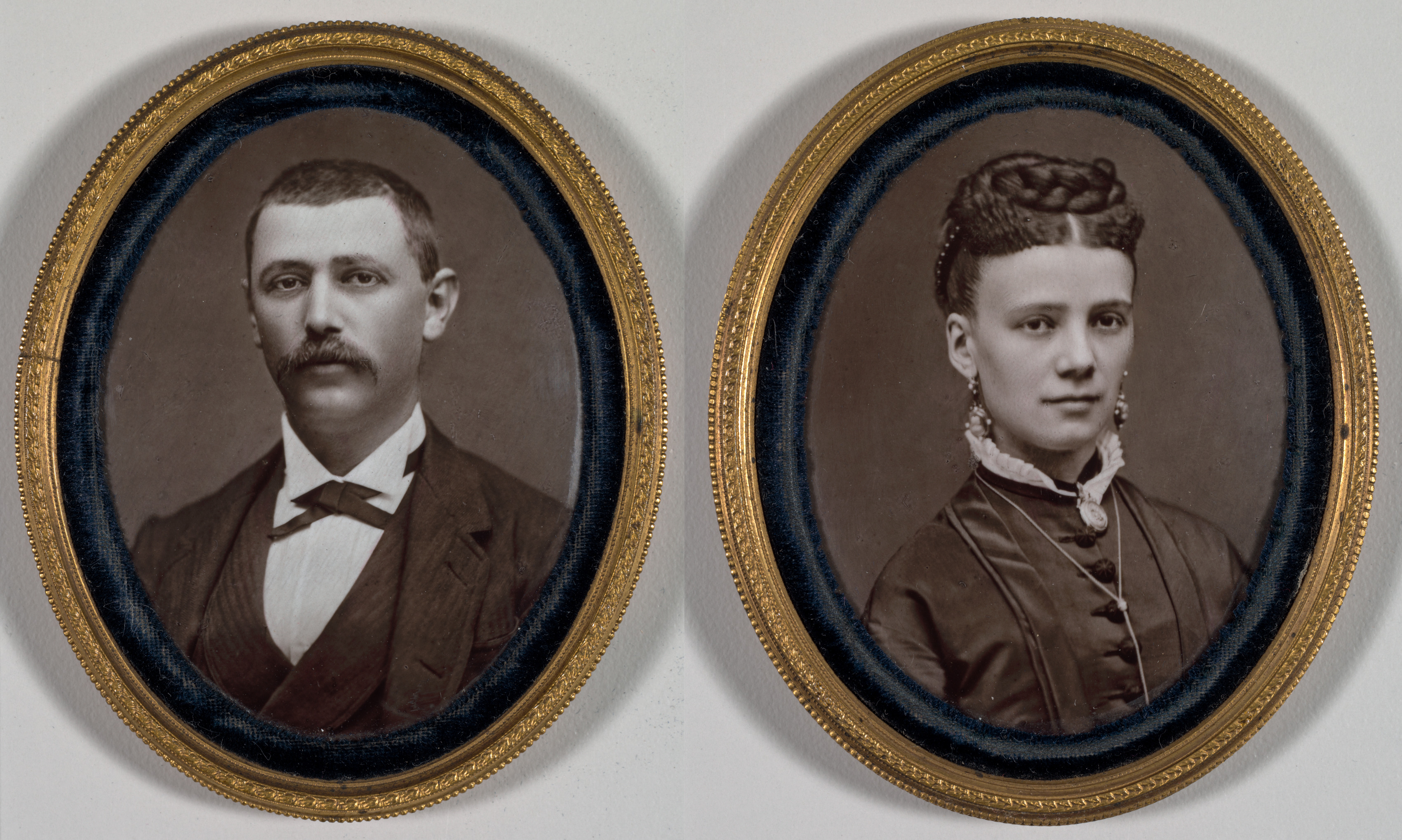
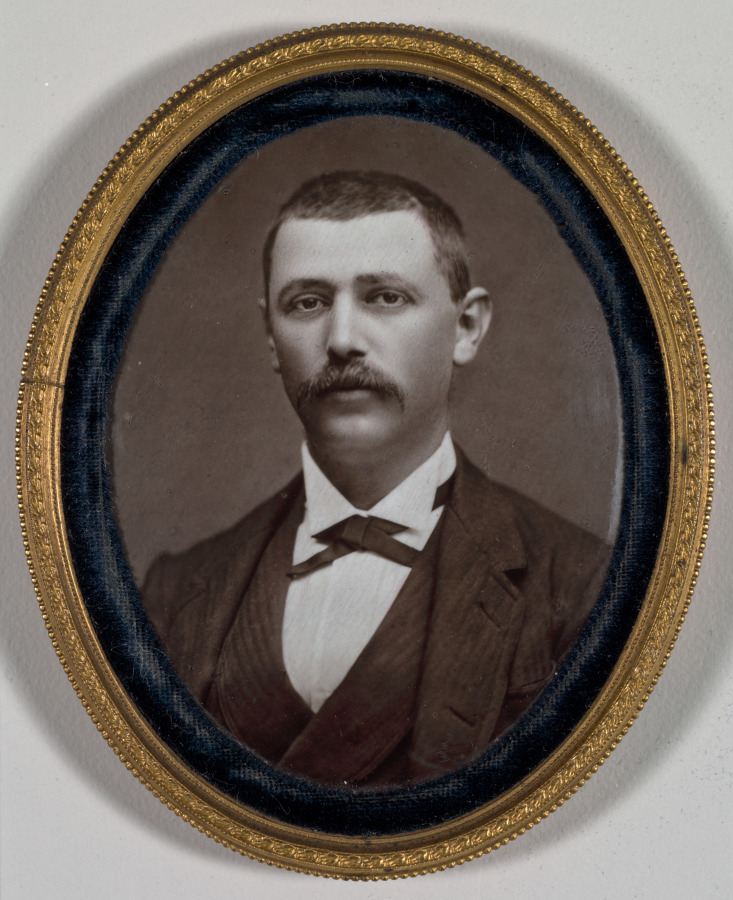
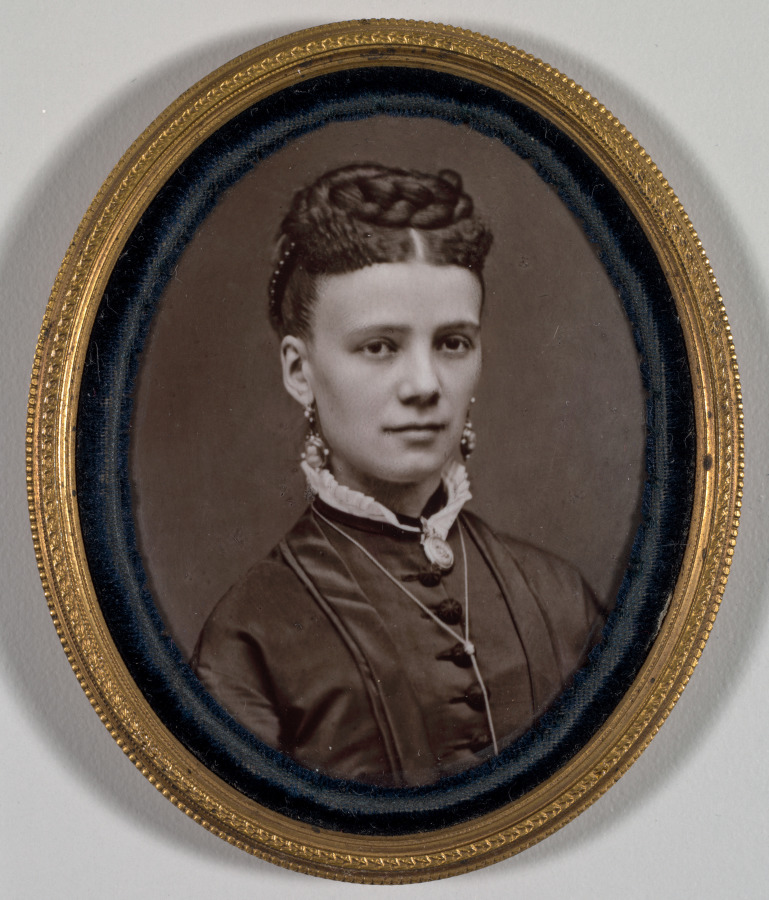
“The photographer would shoot a collodion negative on glass, then produce a positive version, possibly on glass. That would have been sent to a commercial firm which fused the images onto a glasslike coating on metal, a process fairly common in the late 1800s but now used primarily for grave headstones. The portraits were usually inset into a fancy box or tabletop frame for display in the couple’s home but could be made into portable mementos like the pocket-sized leather case.”
Dimensions{"each":{"height":0.077,"height_inch":3,"height_inch_fraction":0.0625,"width":0.062,"width_inch":2,"width_inch_fraction":0.4375}}
OriginFrance
InstitutionThe Cleveland Museum of Art
Accession No.2017.8
Credit LineJohn Cook Memorial Fund
In This Series & Related Works
More by Etienne Carjat
Curatorial Affinity Stream
Continuing the Universe of Etienne Carjat (French, 1828–1906)
Photography • France • Harmonious Works & Contemporaries
Continuous Discovery